Menu
The Durability of Stamped Concrete Patios in Stamford’s Climate
Stamped Concrete Patio Stamford
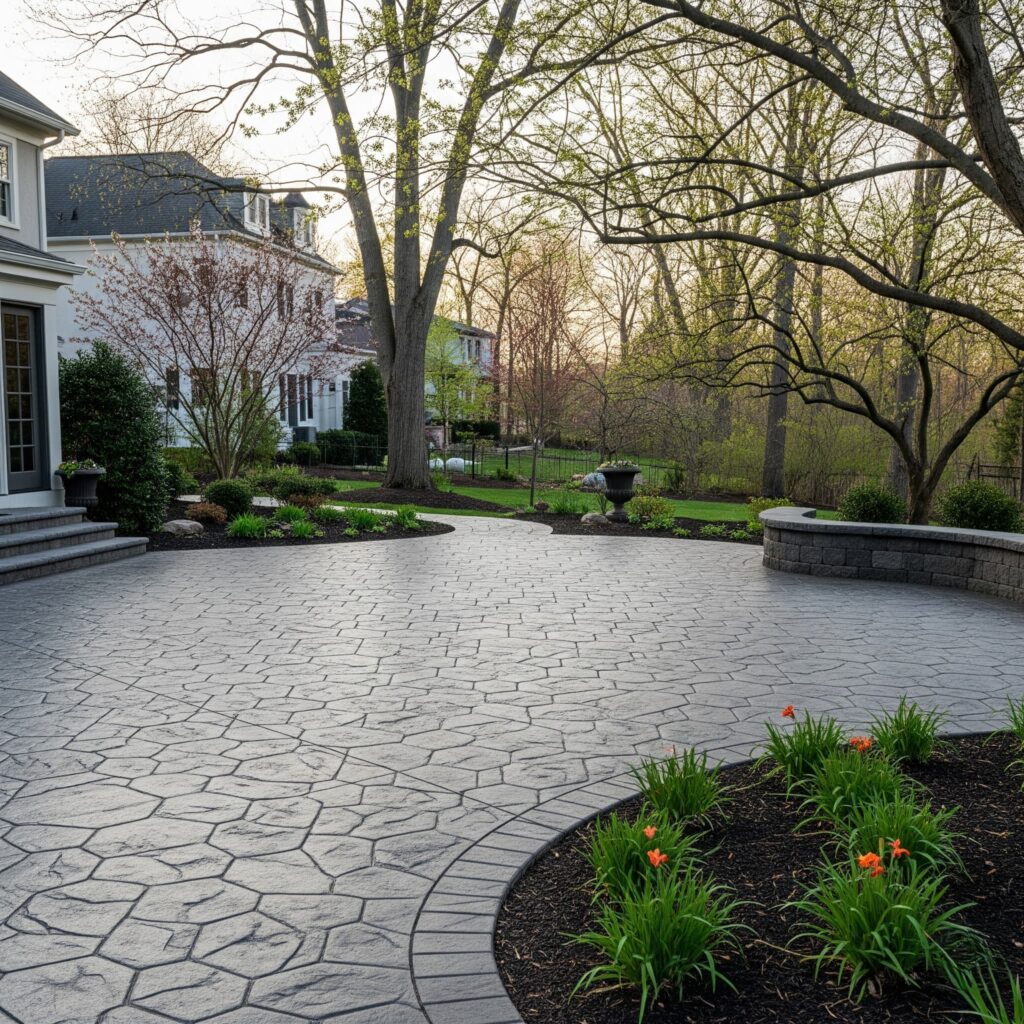
Understanding how stamped concrete patio surfaces perform in Stamford’s challenging Connecticut climate helps homeowners make informed decisions about outdoor investments. From coastal properties near Chelsea Piers to wooded estates near Mianus River State Park, stamped concrete patios face unique environmental stresses that require specific design and maintenance considerations.
Connecticut’s Climate Challenges for Concrete
Freeze-Thaw Cycle Effects
Connecticut is located in one of the most difficult climates for concrete durability, particularly freeze-thaw cycle effects. Freeze-thaw durability refers to how well a concrete resists deterioration caused by repetitive cycles of freezing and thawing, particularly where there is moisture present, causing expansion and stressing in the concrete.
Stamford’s winters have temperatures that vary about the freezing point during the winter months, so many freeze-thaw cycles occur. When water enters concrete pores and freezes, it expands approximately 9%, causing internal pressures, which can lead to micro-cracks in the concrete and surface deterioration over time.
Environmental Factors for Coastal Areas
Stamford’s location adjacent to Long Island Sound creates additional difficulties with regard to stamped concrete patio durability. Salty air increases moisture contact with the concrete, which can accelerate the deterioration of the concrete if protective measures are not applied. Properties that are close to Harbor Point or Cove Island Park are exposed to some of the most extreme environmental conditions in the area.
Additionally, the high humidity levels throughout most of the year keep the moisture content in the concrete relatively high, which makes freeze-thaw protection even more important for maintaining long-term performance.
Requirements for Concrete Mixes Used in the Connecticut Climate
Air-Entrained Concrete Requirements
Properly formulated mixes are crucial for achieving long-term performance of stamped concrete patios in Connecticut’s environment. According to research studies, the C30, C40, and C50 air-entrained concrete were all durable after 300 cycles of freeze-thaw. The air-entraining agent incorporates microscopic air bubbles throughout the mix, which creates spaces for the ice to expand when frozen, thus reducing the internal pressure created by the expanding ice.
According to the International Building Code (IBC) and the International Residential Code (IRC), Connecticut building codes require air-entrained concrete for exterior applications. The recommended range for total air content is typically between 5% to 7%. Other factors, such as type and quantity of cement, water-to-cement ratio, presence and type of admixture, compaction, and the distribution of air bubbles, also influence the freeze-thaw durability of the concrete.
Strength and Density of Concrete
Concrete with a greater compressive strength generally provides better durability in Connecticut’s environment. A minimum compressive strength of 4,000 PSI provides the necessary density to prevent moisture penetration while providing sufficient strength for typical residential applications in Stamford.
Densification of the concrete matrix reduces permeability, thereby limiting the penetration of water that can freeze and cause damage. Quality concrete mixes using an acceptable water-to-cement ratio produce the densest concrete matrices, which are required to achieve long-term performance.
Specific Considerations for Stamped Concrete
Surface Texture and Water Management
The patterns created during the stamping process of stamped concrete affect the drainage characteristics and the maintenance requirements of the concrete. For example, some patterns can retain puddles of water for extended periods after a rain, potentially increasing the freeze-thaw exposure of the concrete. Designing the slope of the stamped concrete to allow the water to drain off quickly can minimize the exposure of the concrete to moisture.
Texture variations produced by the stamping process can also provide places for water to be trapped in the surface if not properly sealed and maintained. However, when properly performed, stamped concrete can provide good durability along with an aesthetically pleasing appearance for decades.
Integral Color and Surface Hardeners
Systems of integral coloring used in stamped concrete can actually contribute to improving its durability. Dry-shake colors are commonly used in stamped concrete because they create stronger colors than if the colors were incorporated into the entire mix. Additionally, the color hardeners increase the density and strength of the surface of the colored concrete, producing a surface that is similar to a plastered surface.
This densified surface density improves the resistance of the surface to penetration with moisture and/or being damaged by freeze-thaw, while the colors remain consistent throughout the life of the patio.
Installation Requirements for Durability
Preparation of the Site and Design of the Drainage System
A successful stamped concrete patio must begin with proper site preparation and drainage system design. As Stamford is comprised of a variety of soil types, from coastal sands to inland clays, the correct base preparation prevents settlement and cracking that could compromise the long-term performance of the stamped concrete patio.
Sloping the drainage of the stamped concrete to direct the water away from the buildings and prevent standing water that could expose the concrete to freeze-thaw can further aid in minimizing the potential for freeze-thaw damage.
Reinforcement and Control Joints
Appropriate reinforcement systems assist in allowing stamped concrete patios to endure thermal stresses and minor ground movements. Placing wire mesh or rebar within the stamped concrete provides tensile strength to the concrete since it is weak in this regard, which can prevent the propagation of cracks.
Strategically placing control joints in the stamped concrete allows for the thermal expansion and contraction of the concrete without the creation of random cracking. Properly spaced and sealed control joints allow the stamped concrete patio to function as a single unit while allowing the concrete to perform normally.
Protection Systems and Sealing
Selection and Application of Sealers
Protectants, such as quality sealers, are critical for the preservation of stamped concrete patios in Connecticut’s environment. Depending on the type of sealer selected, the protectant for stamped concrete can protect against the penetration of water and de-icing chemicals, abrasion, and the penetration of oils and greases.
Acrylic sealers are good for UV protection, enhance the colors of the stamped concrete, and provide moderate protection against moisture. Epoxy sealers provide good chemical resistance, but may need to be reapplied more frequently due to UV exposure in Connecticut. Penetrating sealers provide good long-term protection without changing the appearance of the surface of the stamped concrete.
Schedule for Maintenance Sealing
Resealing the stamped concrete periodically (typically every 2-3 years) is essential to extending the life of the patio. Connecticut’s harsh climate demands more frequent resealing than milder climates.
Using a reputable company to reapply the sealer ensures the surface of the stamped concrete is properly prepared and the sealer is properly applied, maximizing the effectiveness of the sealer. High traffic areas, such as Terry Conners Ice Rink, may require more frequent maintenance due to the increased wear and tear and exposure.
Winter Protection Methods
Considerations for De-icing Chemicals
Connecticut’s methods of winter maintenance can greatly impact the durability of stamped concrete patios. Rock salt (sodium chloride) is one of the most commonly used de-icing agents; however, it can severely damage stamped concrete surfaces by chemically reacting with the concrete and accelerating freeze-thaw cycles. Alternative de-icing agents, such as calcium chloride or magnesium chloride, are less damaging to stamped concrete.
Sand provides traction without damaging the stamped concrete, but sand must be cleaned up in the spring to avoid surface abrasions. Using metal snow removal equipment should be avoided as it can scratch the surface of the stamped concrete, compromising the sealer protection.
Preparing for Winter
Fall Preparations
Activities related to preparing for winter have significant impacts on the stamped concrete patio’s performance. Fall cleanups remove organic debris from the surface of the stamped concrete that can stain the concrete during freeze-thaw cycles.
Final applications of sealer before the winter months can provide the greatest level of protection during the coldest months of the year.
Assessing Spring Damage
After the winter season has ended, it is beneficial to inspect and assess the condition of the stamped concrete patio for any damage that occurred during the winter months. Professional assessments can identify areas requiring attention prior to the damage becoming costly repairs.
Performance Expectations
Expected Durability of the Stamped Concrete Patio
If installed correctly and properly maintained, stamped concrete patios are expected to last 25-30 years in Connecticut’s climate. High-quality materials, coupled with professional installation, will extend the lifespan of the stamped concrete patio beyond the expected 25-30 years.
Research indicates that stamped concrete does not perform any worse than broom finish or smooth finish concrete when properly constructed and maintained. The primary differences are the maintenance needs and the aesthetic longevity of the stamped concrete patio, versus the structural durability of the stamped concrete patio.
Repair and Restoration
Repairing minor problems with the stamped concrete patio can extend the life of the patio. Techniques such as surface restoration (cleaning, resealing, and color restoration) can restore the appearance of the stamped concrete patio to nearly its original state without replacing the patio.
Repairing structural problems (such as crack injection and surface patching) can address issues before they become a problem for the rest of the patio.
Restoration Services
Many companies specialize in restoring the appearance of older stamped concrete to its original state. Restoring the appearance of the stamped concrete patio can be an effective way to extend the life of the patio.
Evaluating Comparative Durability
Comparison Between Stamped Concrete and Alternatives
Compared to many alternative materials, stamped concrete often performs similarly in Connecticut’s climate. Pavers typically last longer (30-50 years), while stamped concrete will last 25-30 years with proper care, but pavers have their own set of problems with freeze-thaw movement and joint maintenance.
While natural stone provides excellent durability, it is often initially much more expensive than stamped concrete. While stamped concrete provides a similar aesthetic appeal as natural stone, the cost of installing stamped concrete is significantly lower than that of natural stone, and the maintenance requirements of both are very similar.
Cost-Effectiveness over Time
Considering the long-term cost implications of stamped concrete compared to alternatives, stamped concrete often provides the lowest cost option for Stamford residents.
Lower installation costs, coupled with moderate maintenance requirements, result in lower lifecycle costs for Stamford residents.
In addition to the ability to easily refresh the appearance of the stamped concrete patio with periodic re-sealing and minor repairs, the durability of stamped concrete and the ability to replace individual components provide excellent value for the cost of the installation.
Adapting to Local Climate Conditions
Understanding Microclimates
As Stamford has a diverse geography, different microclimates exist in the area that can affect the performance of stamped concrete patios. Wooded areas, such as those surrounding Mianus River State Park, may experience slower freeze-thaw cycles, whereas open areas will experience more rapid temperature fluctuations.
Coastal areas will experience moderated temperatures, but increased moisture and salt exposure. Understanding the unique microclimate of your property will enable you to tailor the design and maintenance of your stamped concrete patio.
Experience with Local Environment
Working with local contractors who have experience with the unique challenges of the Connecticut climate will ensure the best possible performance from your stamped concrete patio.
Local contractors are knowledgeable regarding the building codes of Connecticut and will select the materials and techniques needed to ensure the long-term success of your stamped concrete patio.
At Stamford Concrete Pros, we specialize in creating durable stamped concrete patios designed specifically for Connecticut’s demanding climate. Our experience with local conditions, from coastal environments to inland settings, ensures your stamped concrete patio will provide lasting beauty and performance. We use only air-entrained concrete mixtures, proper reinforcement techniques, and premium sealing systems to maximize durability in freeze-thaw conditions.
LATEST POSTS